

Air drying
How can Transformer Drying Efficiency be measured and improved using an Air Drying System?
- This topic has 3 replies, 4 voices, and was last updated 1 month, 1 week ago by .
Answers
-
October 4, 2024 at 7:57 pm by Yara Haddad
Transformer Drying Efficiency can be measured by evaluating the effectiveness of moisture removal from the transformer oil and the overall speed and consistency of the drying process. Key metrics include the reduction in moisture content, achieved dielectric strength of the oil post-drying, and the time taken to reach desired dryness levels. Moisture Content Tests before and after drying provide quantitative data on drying effectiveness, while dielectric breakdown tests assess the insulating properties of the purified oil. To improve drying efficiency using an Air Drying System, several strategies can be employed. Optimizing air flow rates and temperature settings ensures maximum moisture absorption and evaporation. Regular maintenance of the drying system, including cleaning filters and checking heating elements, prevents performance degradation. Implementing real-time monitoring with humidity and temperature sensors allows for immediate adjustments to drying parameters, maintaining optimal conditions. Additionally, upgrading components such as high-efficiency fans or advanced filtration systems can enhance the overall performance of the Air Drying System, leading to more efficient and effective transformer drying.
-
February 20, 2026 at 7:21 am by Craig Price
In addition to the metrics and optimization strategies already mentioned, it’s important to consider how pre-drying preparation and equipment design influence the overall efficiency of an air drying system. Moisture removal can be significantly improved, especially in areas where stagnant air may persist, by ensuring that the transformer’s internal pathways, such as the magnetic core and windings insulation spaces, are adequately exposed to dry air circulation. Similarly, the integration of controlled heating profiles tailored to the transformer design can help shorten drying times without increasing the risk of thermal stress on components.
Another factor that often gets overlooked is how air drying integrates with other moisture-removal techniques. For example, coordinating the air drying process with pre-vacuum conditioning or intermittent vacuum stages can accelerate the desorption of bound moisture and improve uniformity. This hybrid approach is useful when dealing with transformers that have been out of service for prolonged periods, or exposed to high humidity.
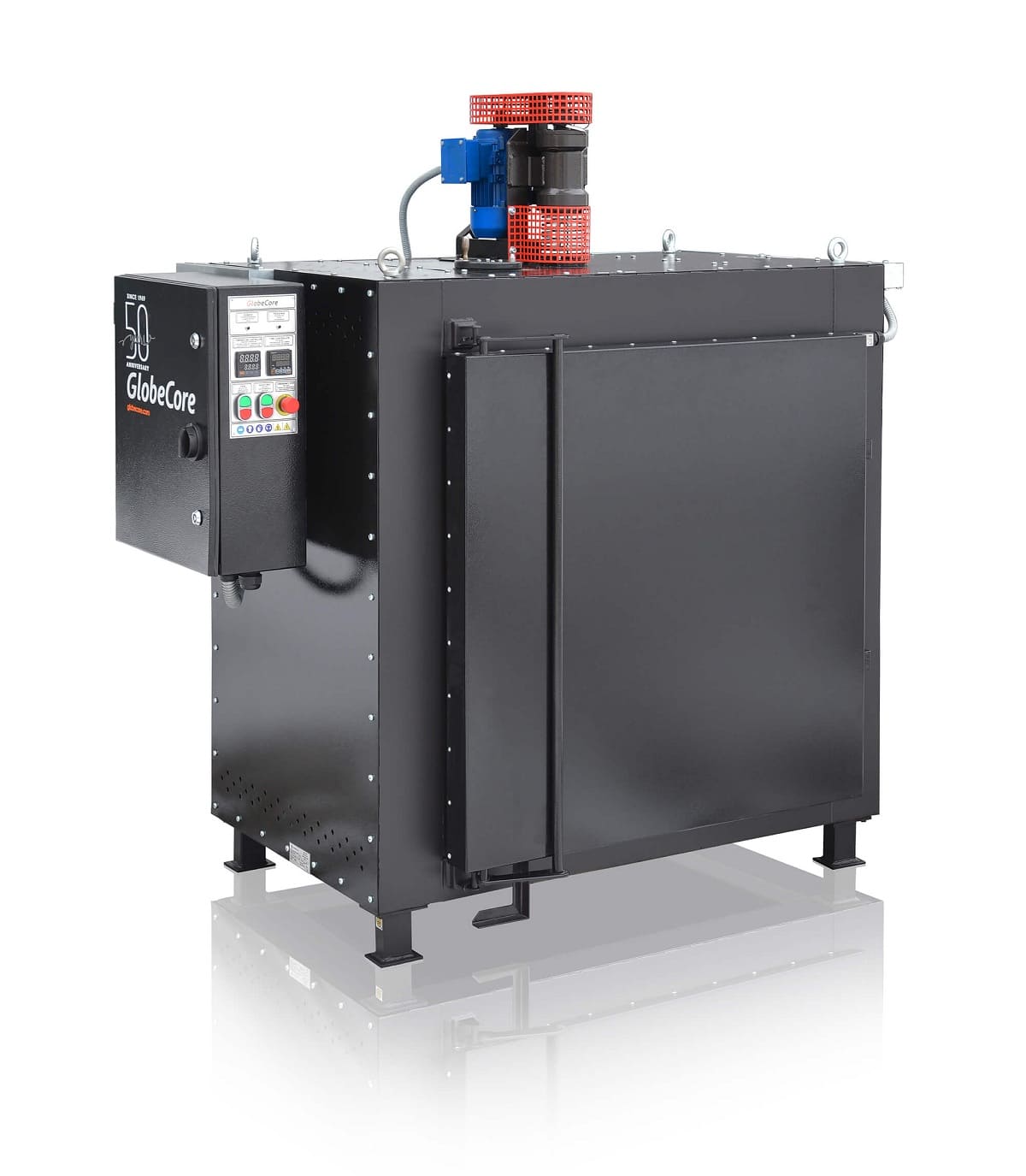
For a deeper understanding of how controlled heat and vacuum environments support effective moisture desorption, especially in transformer windings, it is worth reviewing this article on the use of vacuum drying ovens for transformer windings, as it highlights additional principles that can complement your air drying system: https://globecore.com/transformer-maintenance/vacuum-drying-oven-for-transformer-windings/. -
February 20, 2026 at 7:25 am by Stephanie Lee
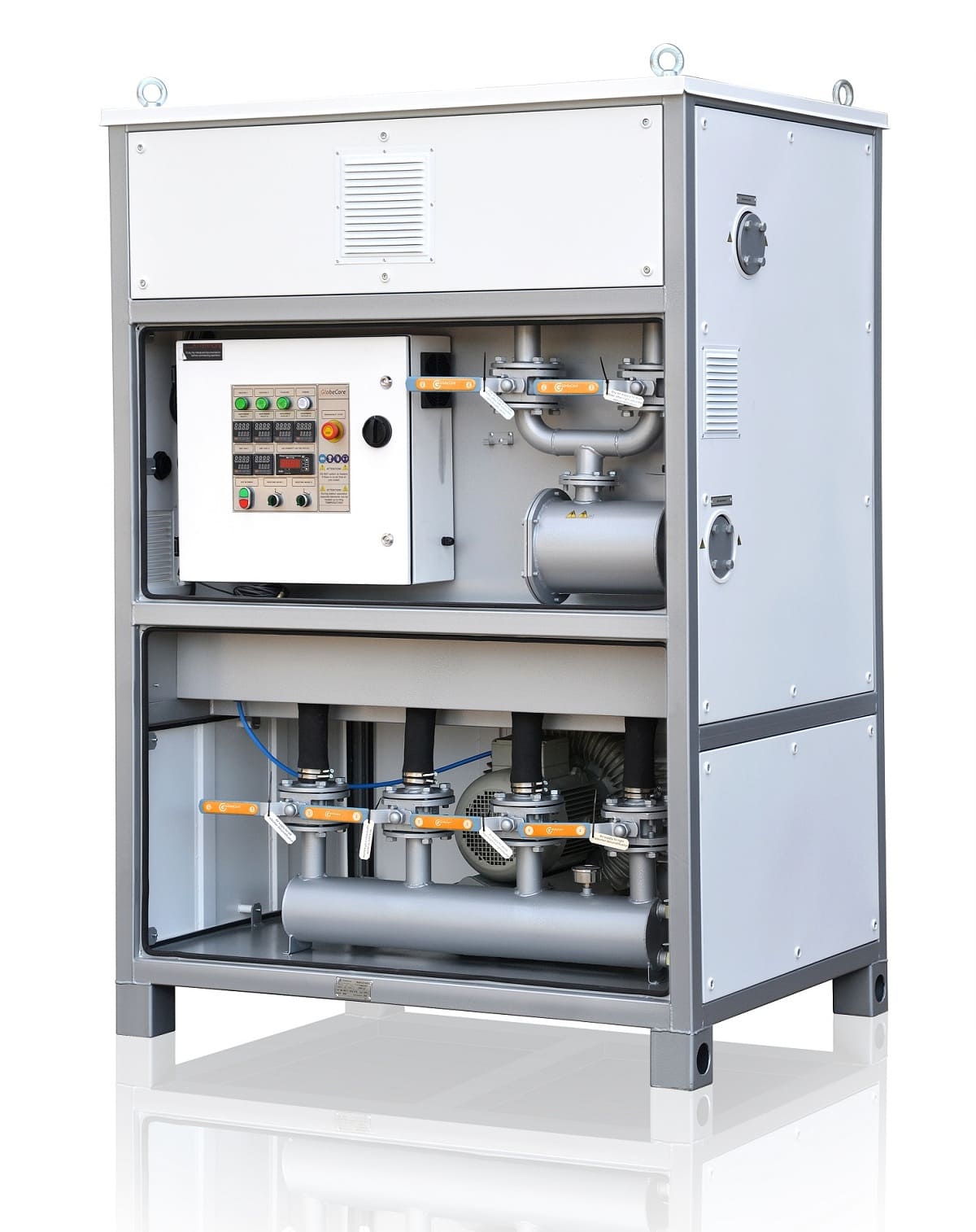
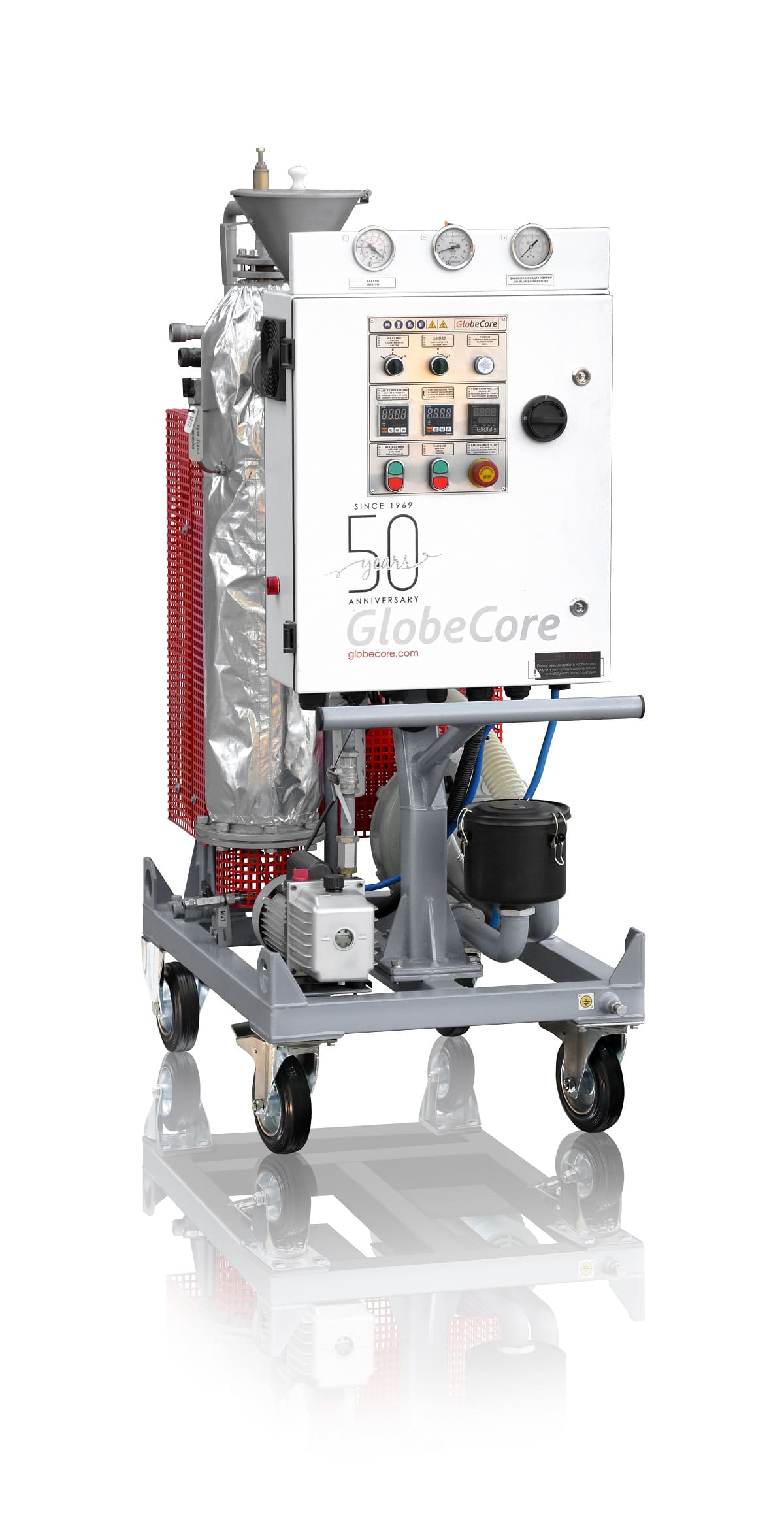
You’re right to highlight pre-drying preparation and equipment design — these routinely make the difference between a long, uneven drying job and a fast, repeatable result. Before putting a transformer on an air-drying cycle, remove seals and internal obstructions where practical, ensure breathing paths through the core and winding insulation are open, and plan air inlet/outlet locations to avoid dead zones so dry air and heat reach the deepest cavities. Use a dry-air generator capable of low dew points (units that produce air down to -40 to -50°C) and sufficient flow (typical practical flows on portable units are in the 1.5–3 m3/min range) and pair that with controlled heating of the circulating air and/or windings (use winding heaters or low-frequency heating with conservative ramp rates) to speed desorption without overstressing insulating materials.
Integrating air drying with vacuum stages and sorbent-based drying boosts both speed and uniformity for transformers long out of service or heavily humidified. A typical effective sequence is pre-vacuum conditioning to remove free moisture, followed by heated dry-air purge cycles and intermittent or continuous low-pressure stages to pull bound moisture from windings; zeolite dryers and sorbent-regeneration blocks support continuous operation by keeping circulating air at very low dew points while allowing online drying. Monitor progress with dew point meters and TOR-type moisture instruments for oil and gas measurements, and finish with a controlled purge and verification (oil/winding moisture and dielectric tests). Careful sequencing, proper purge paths, conservative temperature profiles, and sorbent management are the practical levers that substantially improve air drying efficiency and repeatability.